

Documents to gather for an estate
Getting the right papers together early can make estate administration more orderly and less stressful. This guide sets out the main documents to bring to a first meeting, with notes on what to do if something is missing.
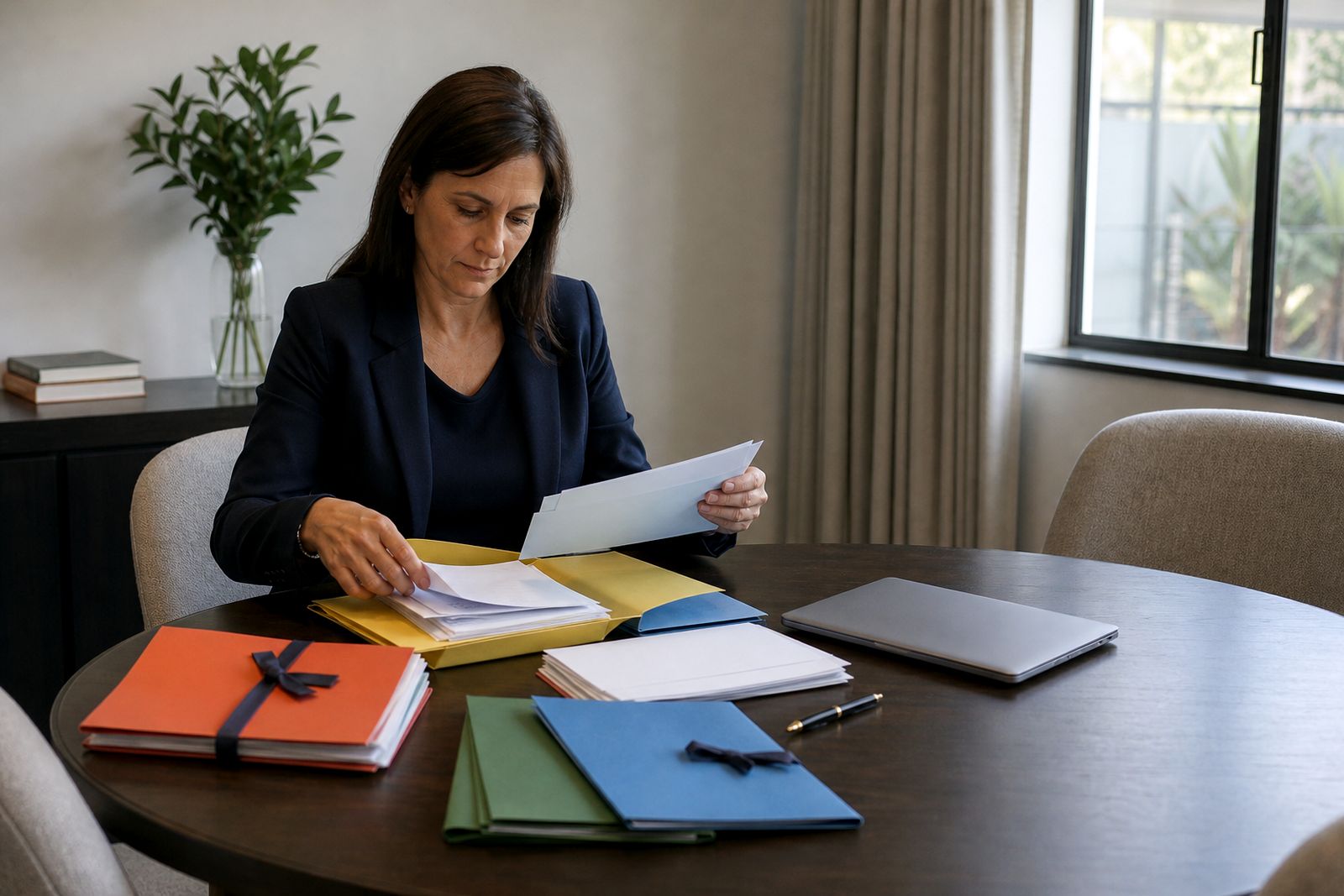
Start with identity and basic personal documents
The first group of documents confirms who the deceased was, who the close family members are, and where official notices and paperwork may need to be sent. If you are meeting on behalf of the family, bring your own identification as well. Clear copies are often enough for an initial discussion, and originals can be kept safe until they are needed.
If any document cannot be found, make a note of that before the meeting rather than guessing. Small differences in names, initials or marital status can affect how the estate is handled, so it helps to bring what you have even if it seems outdated.
- Identity document or passport of the deceased
- Death certificate, or confirmation from the funeral service provider if the certificate is still being issued
- Your identity document if you are the person attending the meeting
- Marriage certificate, antenuptial contract, divorce order or other marital documents where relevant
- Birth certificates for minor children where relevant
- Proof of the deceased's last residential address
- Any document showing tax reference numbers or similar official reference details
Bring the latest will and any estate planning papers
The will is one of the first documents we look for because it helps show the deceased's wishes and who may have been nominated to act in the estate. Bring the latest signed original if you have it, but also bring older versions if there is any uncertainty about which one came last. Do not remove staples or marks from the document, as the physical condition can matter.
It is also useful to bring notes about how assets were meant to pass, especially where there are trusts, prior marriages, dependants, family loans or business interests involved. Each estate depends on its own facts, so a short written summary from the family can help us spot issues early.
- The latest signed original will, if available
- Any earlier wills or codicils kept with it
- Letters of wishes or personal instructions found with the will
- Trust deeds, trustee resolutions or letters relating to any existing trust
- Lists of assets and liabilities prepared by the deceased
- Notes about maintenance obligations, family arrangements or dependants
Gather records of assets, accounts and income
An estate cannot be administered properly without a clear picture of what the deceased owned or controlled. For a first meeting, aim to bring the most recent documents you can find for bank-style accounts, investments, property, vehicles and business interests. If papers are spread across a filing cabinet, home safe and online folders, do not wait until everything is perfect. Start with a working pack and add to it as more information turns up.
It also helps to flag assets that may sit outside the estate process, such as nominated benefits or jointly held assets, because those still need to be reviewed carefully. The exact treatment depends on the facts and the wording of the relevant documents.
- Recent statements for transaction, savings and investment accounts
- Share, unit trust or portfolio statements
- Title deeds or property purchase documents, or municipal account records showing ownership
- Vehicle registration papers and finance statements if applicable
- Company, close corporation or partnership records where the deceased had an interest
- Trust records if the deceased was a trustee, founder or beneficiary
- Pension, provident, retirement annuity or living annuity statements
- Rental agreements, lease schedules or records of other regular income
Do not forget debts, contracts and monthly commitments
Families often arrive with asset papers but not the records showing what the deceased still owed or what had to be cancelled, transferred or settled. These documents are just as important. They help identify creditors, ongoing debit orders and service contracts that may need attention.
Bring whatever shows the current position, even if the balance may have changed since the last statement. A rough list of recurring payments is also useful, especially where there were household costs, school fees, medical expenses or support paid to dependants.
- Home loan, vehicle finance and personal loan statements
- Credit card and store account statements
- Medical aid records and healthcare account balances
- Municipal, levy and body corporate statements where property is involved
- Service contracts such as security, internet, subscriptions or equipment rentals
- Suretyship documents or personal guarantees if any were signed
- Records of maintenance obligations or other regular support payments
Collect policy documents and benefit nominations
Life cover, funeral policies and other benefit records can affect both the practical side of winding up an estate and the support available to family members after a death. Bring full policy schedules if you have them, not just premium reminders. Where there are employer-related benefits, bring any retirement fund or group risk paperwork found among payslips or HR records.
If there are nomination forms, beneficiary letters or policy endorsements, include those too. They do not always settle every question on their own, but they are important starting documents and can save a lot of back and forth later.
- Life policy schedules and recent policy correspondence
- Funeral cover documents
- Disability or dread disease policy records if benefits may be payable
- Retirement fund and employee benefit statements
- Beneficiary nomination forms where copies are available
- Payslips or employer letters that refer to death benefits or group cover
How to organise the pack before your first meeting
You do not need a perfect file to get started. What matters is that the papers are grouped clearly and that missing items are identified. If possible, separate originals from copies and use simple labels such as identity, will, property, bank accounts, debts and policies. A typed or handwritten asset and document list is very helpful, even if some entries are incomplete.
For online meetings, scanned copies or clear phone photos can work for the first discussion provided every page is readable. If a document is held by an accountant, family member or financial adviser, note who has it and how it can be requested. That small step often saves time and confusion later, and it helps the family see what still needs to be chased.
Every estate is different. The right documents will depend on the assets, family structure and whether there is a will, a trust or a business involved. Bring what you have to the first meeting and we can help you work out what else is needed for your situation.
What our Trust and Estate Administration customers say
Verified Google reviews
Questions we get asked
What if we cannot find the original will?
Bring any copy you have, along with notes about where the original may have been kept and who may have held it. The next steps depend on the facts, so it is best to raise this early rather than waiting.
Should we bring originals or copies?
For a first meeting, clear copies are usually useful, but keep originals safe and available. Some processes may later require original documents or certified copies depending on the document and the circumstances.
What if the deceased had a trust or business interest?
Bring the trust deed, trustee records, business registration papers, shareholder or member records, and any recent financial documents you can find. These matters often need extra review because the estate and the trust or business may connect in different ways.
Also worth a look



Talk to us about your trust or estate
Send a short note through our contact form about the trust, will or estate you need help with, and we will set up a first meeting.
Open the contact form